Table Of Content
While healthcare proved to be one of the most prominent sectors to examine the evidence base for how good design benefits building occupants, visitors and the public, other sectors also have considerable bodies of evidence. And, many sectors benefit from literature reviews that draw together and summarise the evidence. In the UK some were led by the UK Commission for Architecture and the Built Environment, a government watchdog established by the Labour Party following its election in 1997 and commitment to improving the quality of the UK stock of public sector buildings.
Building performance: Indoor environmental quality, light and sound - University of Sydney
Building performance: Indoor environmental quality, light and sound.
Posted: Thu, 23 Nov 2023 07:39:27 GMT [source]
Evidence Based Design and healthcare: an unconventional approach to hospital design
The course was conducted over an eight-week period to provide trainees with sufficient time in between meetings for reading, reviewing, and preparing material. Adult learning theory was used as a framework for the problem-based, collaborative learning environment where the teachers facilitated rather than directed learners [30]. During the course, junior doctors used their own patient cases to increase the course relevance to their practice and patient care [31]. Additional File 1 contains details of the structure and content of the EBM-SDM training course.
Public open space
In the following results section, junior doctors’ quotes are indicated with “J” and a number; consultants’ quotes are indicated with “C” and a number. Promoting the application of design to improve healthcare performance, patient satisfaction, staff productivity, and safety. To learn more about evidence-based design in healthcare, contact HMC Architects today.
EDAC Educational Partner
Future research opportunities include evaluation of the impacts of integrated EBM-SDM training content and strategies to determine optimal approaches for educators to adopt in both private and public settings. Future research should also focus on the efficacy of strategies to empower junior doctors to become more independent in using their EBM and SDM skills, such as training champions and consultants who want to help their junior doctor trainees develop skills and experience in EBM and SDM [52, 58]. Finally, further investigation is warranted into the significance of undertaking medical training either before or after the introduction of EBM in the 1990s, and how this impacts the medical hierarchy, EBM-SDM training and practice opportunities for junior doctors, and patient care. These investigations could incorporate other qualitative methods such as ethnography to fully capture perceived dynamics and cultural conventions within medical disciplines.

The University is committed to providing access and ensuring student success, and to a culture of innovation, entrepreneurship, and commercialization of discoveries by our community of scholars. With an enrollment of approximately 41,000 students, UTA is the second-largest institution in the UT System. “America’s future is brighter with the talents of Latinos,” said Sarita Brown, co-founder and president of Excelencia. “Excelencia brings national attention to these effective efforts advancing students’ higher education journeys with 24 college and university presidents and chancellors who serve as leaders for Latino student success.
Notice of Funding Opportunities
The Transforming Your Research Into Teaching (TYRIT) Workshop Series introduces participants to an evidence-based course design framework and helps them design a course based on their current area of research interest or one they may need to teach in their future careers. These findings suggested that future medical education and research should include training that integrates EBM and SDM that acknowledges the complex environment in which this training must be put into practice, and considers strategies to overcome barriers to the implementation of EBM-SDM learning in practice. Inpatients often need to be lifted and adjusted in hospital beds so they don’t develop sores and other complications.
Weaving Safety and Security into Every Building
As a result, you might re-design in a way that allows you to place the units in only 20 percent of the rooms. This compromise could work within your budget while also ensuring that patients are receiving the most efficient care. EBD also has value in explaining that a well-designed education space includes consideration of many physical facets, such as room size, thermal comfort, acoustical characteristics, artificial and natural light, indoor air quality and more. “Research indicates a correlation between being too hot or too cold and concentration falling off,” says Steven Turckes AIA, LEED-AP, REFP, K-12 education global market leader for Perkins & Will.
What is Evidence Based Design Journal? - ArchDaily
What is Evidence Based Design Journal?.
Posted: Fri, 10 Oct 2014 07:00:00 GMT [source]
A Toolkit for Redesign of Health CareStrategies for comprehensively redesigning and transforming the processes for care in a hospital. Site-writings, are subjective, streaming descriptions of personal experience which, over time, will be transformed from anecdote to data and from there, to evidence. Participants will work slowly, one aspect of course design at a time, to have time to fully develop their ideas. They will also serve as thought partners for fellow graduate students as they construct their own courses. The authors wish to thank the doctors who participated in the interviews reported in this paper.
Spaces4Learning 2024 Predictions for Educational Facilities: Part 3
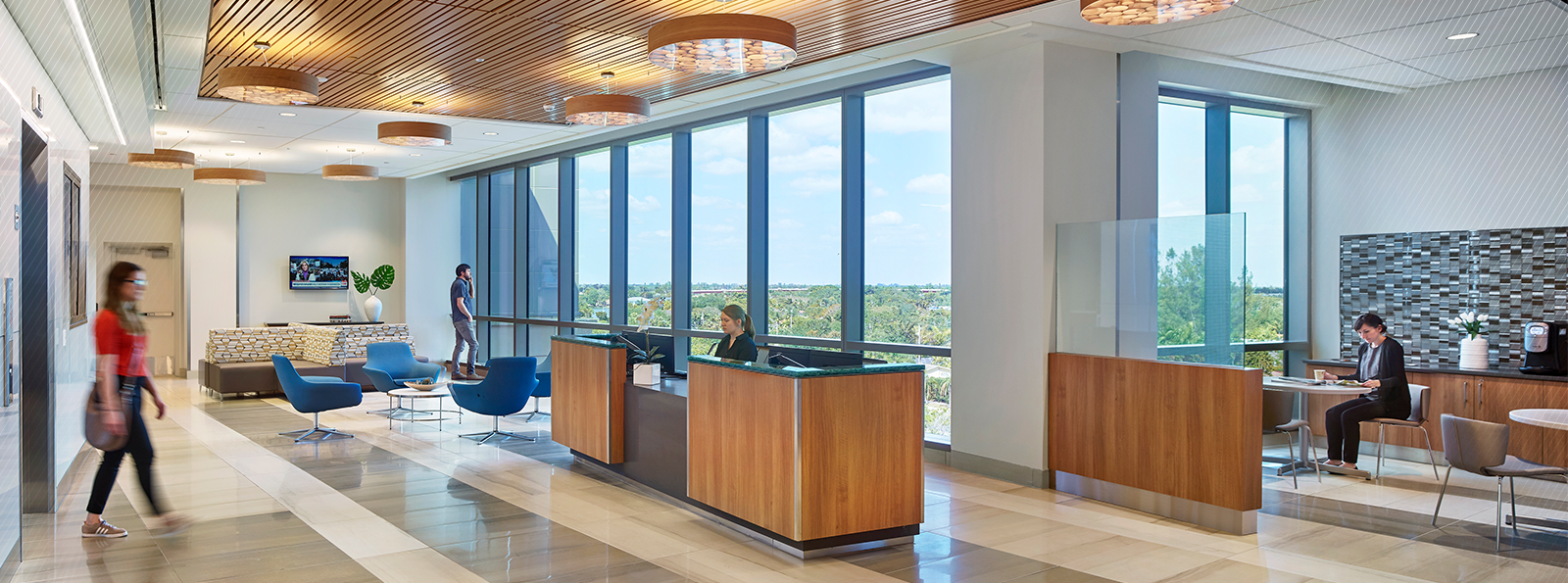
(Debajyoti 2011) These factors combined result in difficulty translating research findings into design knowledge, difficulty developing a centralized evidence base for design, and difficulty making informed predictions based on research findings. When HMC Architects designed Kaiser Permanente Fontana Medical Center in Fontana, California, we implemented a number of evidence-based design features, including floor-to-ceiling windows and skylights that provide a great deal of natural light. In spaces without windows, we included photographs of nature, which bring a sense of the outdoors into the hospital. These features offer patients a greater sense of calm and accelerate the healing process.
The requirements to maintain your EDAC certification involve six hours of approved continuing education units (CEUs) in evidence-based design every two years. We make it easy for you by offering an extensive list of approved continuing education courses available in person and online to develop your EDAC knowledge base. All articles have been written with non-academics in mind, by acknowledged experts in the fields of architecture and gerontology. Each article has been reviewed by an esteemed panel of academics, with significant experience in research and design practice. These topics of noise and lighting, along with many other design topics, can support better design decisions in the Hospital as well as all buildings for the benefit of personal and societal health and wellness. Patient falls, which are common in hospitals, can result in serious injuries, extend a patient's stay, and drive up the cost of care significantly.
We have years of experience applying research-based design principles in our projects and can help you find the ideal solutions for your facility. When you work with an experienced design firm that conducts research holistically, taking into consideration the physical and emotional needs of patients and staff, workflows, and your budget, you can design a building that supports healing and operates exceedingly well. As healthcare institutions are under increasing pressure to improve efficiency of care in compassionate care settings, there is no better time for health practitioners to link with healthcare designers to improve the care model by finding the evidence for what works. EBD is an outcome-driven approach to designing the built environment based on credible research and empirical data.
In contrast, younger consultants who had prior exposure to EBM training and practice tended to appreciate the benefits of EBM for junior doctors and patients. In another study of junior doctors and senior anaesthetists, interviews indicated there was a link between career stage and workplace settings and EBM attitudes [40]. In this study, senior anaesthetists (consultants) were reluctant to make decisions or change practice based on evidence in preference to their own experience and opinion [40]. Junior doctors regarded this as reluctance to change as due to older age, but the consultants saw it as surrendering their professional autonomy [40]. Thus, there may be a tendency among more senior doctors to resist practising EBM in favour of using their own decision-making preferences, that carry a risk of cognitive bias and are potentially suboptimal or obsolete decisions [40,41,42].
UTA is one of 24 colleges and universities across the country supporting the release to inspire and support educators, community leaders, funders, and policymakers to replicate and bring to scale data-informed practices that work for Latinos in higher education. By designing your facility with improved patient contact and lines of sight in mind, you’ll create more soothing and more efficient spaces. Anchoring decisions on credible research builds assurance and helps clients justify design choices to project stakeholders. As technology evolves, codes become more stringent, and construction costs rise - utilizing proven, successful strategies validate these design decisions. EBD looks to enhance the experience of all users in a space by creating a tailored design on a case-by-case basis. EBD design approach aims to bolster efficiencies to operational flow, maximize plan organization, and promote staff satisfaction which ultimately enhances the client experience.
Those practising as physicians, including a neurologist and cardiologist, reported greater access to high-level evidence and guidelines, with one consultant claiming that “cardiology is very algorithmic in a lot of ways, and that makes that easier…there’s only so many things you can do…. In Phase 1, interview questions were designed and piloted with three junior doctors and were subsequently refined into the final interview schedules. In Phase 2, interviews were piloted with one consultant, after which the questions were modified for use with this cohort. Interviews took place in quiet locations with each junior doctor from 2019 until 2022, and with each consultant during 2021; they were conducted face-to-face in 2019, and via Zoom from 2020 due to the COVID-19 pandemic [34]. All interviewees were given the option to comment on their interview transcripts and study results. Observational notes were taken by MSi to capture additional contextual factors (such as tone of voice) to assist with thematic analysis.
We have reviewed over 1,190 research publications and selected 215 articles that are most relevant to the design process. Perhaps the two words “Architecture” and “Medicine” next to each other is a new concept, yet the goal of this website is to discuss how these two fields have a potential to overlap for a better built environment to live and work in. The fields of Architecture and Medicine have changed quite a bit in the past fifty years, and while there have been many beneficial developments in each of these very large fields, there are still gaps relative to health in the built environment. The Center for Health Design and Healthcare Design are terrific resources for information on evidence-based design.



No comments:
Post a Comment